
About
Edit source

Germán Méndez Bravo (pronounced hehr-MAHN) Software Engineer · Systems & Infrastructure at Scale · Python Efficiency · Lazy Imports
Hey there! I’m Germán, though you might have crossed paths with me online as Kronuz. Grab a warm drink and step closer to the fire. Stay a while and listen to a story: like most of mine, it starts with a burning desire to know what was hidden behind the screen.
My affair with computers began as a wide-eyed kid in Mexico City, in the chaotic glow of the late ’80s. Picture an eleven-year-old hunched over a monochrome CRT, fingers stumbling across a stiff keyboard, trying to bend that blinking cursor to his will. Those first lines of BASIC cracked a door open, and on the other side was the question I’ve never stopped asking: how does this actually work?
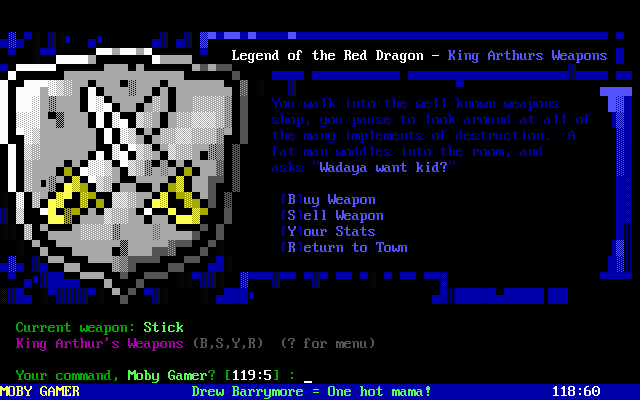 The door swung wide the day our modem started screeching. Dialing into BBSes like Tierras Extrañas, Pixel BBS, Coyoacán BBS, or Tornado BBS (some running on PCBoard, some on Wildcat! or Renegade) turned a lonely CRT into a window onto other worlds: file archives, electronic magazines, Legend of the Red Dragon and the other door games, and ANSI art scrolling down the screen one glorious block at a time. I can still feel the agonizing suspense of an Xmodem transfer ticking upward byte by byte, half ritual, half prayer… until Zmodem arrived like a ray of light, streaming data so fast it felt like the future had finally caught up to the phone line. Around that time, with my cousin Victor I built what we proudly billed as a “digital ouija,” a small hack that conjured answers out of nowhere and left our friends honestly unsure whether we’d bent reality. The trick mattered less than the itch it left: I wanted to know how every illusion was wired underneath.
That itch followed me into my college years at the Instituto Tecnológico de Morelia, where my projects had a habit of unsettling the faculty. One was an adventure game so far past what the curriculum expected that it took months of demos to convince a few professors I’d really written it. Another was a working sound card I’d soldered onto a parallel port. A third rendered the Dining Philosophers problem, deadlocks and all, in 3D Studio Max. None of it was assigned. I just couldn’t leave a machine alone once I suspected it could do something it hadn’t been told to.
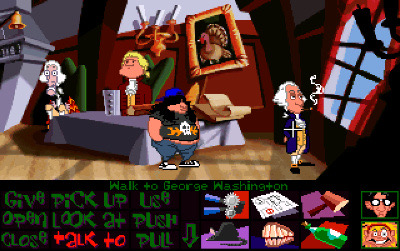 It was then that I fell for the folklore of the dial-up underground, devouring issues of Phrack Magazine and returning to ‘The Hacker Manifesto’ until its raw defense of curiosity felt like my own. The true obsession took hold when I found zines that dissected x86 Assembly, polymorphism, and antivirus circumvention. I can still feel the absolute thrill of invoking int 21h and navigating Ralph Brown’s Interrupt List to manipulate the hardware directly. The low-level tricks I learned from those digital archives became a foundational toolkit, a set of skills I would carry into several of my projects for years to come. In that collective mythos, looking under the hood stopped being a hobby and finally hardened into a lifelong craft. I learned to read software the way it didn’t want to be read, with disassemblers and a debugger called SoftICE that felt like sorcery. This kind of low-level work is how I drifted into contributing to DOSBox. The change I’m proudest of there wasn’t a feature but a subtraction: instead of repainting the entire emulated screen every frame, I taught it to redraw only the pixels that had actually changed. In a fully emulated machine, where every drawn pixel costs dearly (and the prettier scalers only made it worse), that one idea turned slideshows back into games. Fast-framed games like Doom and Tomb Raider suddenly ran the way they were meant to. And I was again enjoying my favorite games like The Legend of Kyrandia, Day of the Tentacle, and Warcraft II with upscaled graphics. I didn’t have the words for it yet, but I’d found the thread I would pull for the rest of my career: the biggest wins usually come from doing less, not more.
 Optimizing other people’s engines eventually made me want one of my own. A full rewrite of Open Zelda, renamed Open Legends after a polite but unmistakable nudge from Nintendo, was my first real plunge into serious C++. It had a full world editor built on the Windows Template Library, scripted its creatures and triggers in Pawn, and rendered through Direct3D. I lost whole nights placing tiles and agonizing over how a sprite ought to move. (The original SourceForge project is still up.) It taught me more than any class did and dropped me down a rabbit hole of design patterns, game architecture, and eventually Knuth that, if I’m honest, I never fully climbed out of.
After that, the open source just kept happening, usually because I wanted a tool that didn’t exist yet. A line-by-line Python port of a JavaScript parser (esprima-python). One of the first real SCSS compilers for Python ( pyScss), from back when server-side CSS still meant Node wasn’t on the table. Small, sharp C++ pieces like base-x, uinteger_t, and a header-only B-tree, plus mech, a way to drive VMware from Vagrant without paying for the plugin, and patches scattered across Django and a dozen projects I admired. A few wandered surprisingly far from home: SublimeCodeIntel, a code-intelligence plugin I started for Sublime Text, grew thousands of stars and a life of its own, and an
isn extension I wrote for PostgreSQL in 2004 has quietly shipped inside every copy of Postgres since. There’s something humbling about half-forgotten code running on machines you’ll never see.
 Before long I wanted to build things bigger than I could alone, so I co-founded a pair of startups, Deipi and then Dubalu, where as CTO I spent as much time growing engineers as systems. The largest of those systems was Xapiand, a distributed search and storage engine written, lovingly and stubbornly, in C++. (That header-only B-tree from a moment ago? It started life inside Xapiand.)
 In early 2020 I packed up that life and moved my family to Silicon Valley to join Meta, in equal parts thrilled and terrified. A month later the world locked down, and we got to know a new country from inside our apartment. In the middle of all that, I built Lazy Imports, a runtime trick with an outsized blast radius: don’t import a module until something actually reaches for it. It cut Instagram’s server start-up time and trimmed memory across the fleet, and it touched off a long, loud debate in the Python community that became PEP 690. The PEP was rejected, which stung. The idea, clearly, was not done.
That debate came back sharpened as PEP 810, Explicit Lazy Imports, the same notion with its rough edges filed down, and this time the Steering Council said yes; it’s headed for Python 3.15. The thread that started with a DOSBox patch held the whole way through: make the runtime explain itself, and pay for less than you import.
For all the big names, the tools I reach for first are still  C++ and Python, with TypeScript and PostgreSQL close behind and a wary, arms-length respect for Java that I doubt will ever warm into friendship.
A quest to understand the universe hidden behind the screen.
Underneath all of it, the search engines and the PEPs and the company logos, there’s still that eleven-year-old in Mexico City, delighted that a box full of switches will do whatever you ask, as long as you learn to ask precisely enough. Every project since has been the same small rebellion against boredom, one more quest to understand the universe hidden behind the screen.
These days you’ll catch me writing code, exploring California with my family, tinkering on things nobody asked for, or lost in a good book. Now and then you’ll even catch me sharing a quirky commit on GitHub or LinkedIn. I’m always up for working on tools and systems that push a little further than they’re supposed to. If something here resonates, reach out. I promise I’m friendlier than a Java garbage collector.